Seguridad Mania.com - España y América Latina
Portal sobre tecnologías para la seguridad física
- Destacamos »
- software Anti Blanqueo

NORTH HALEDON, NJ -- (Marketwired) -- 01/16/14 -- The Digital Right to Repair Coalition (DRTR) is calling for a basic reform to the Digital Millennium Copyright Act (DMCA) as a way to clarify owners' rights to tech assets as diverse as cell phones, game stations, servers, and medical equipment, according to Executive Director Gay Gordon-Byrne.
"Right now, owners of such assets do not always own what they bought," she said. "Depending on the manufacturer, claims of copyright infringement are increasingly being used to prevent people from trading used equipment as well as to monopolize access to repair by blocking access to service documentation, diagnostic software, tools, and access to 'recalled' code known as patches and fixes," Gordon-Byrne added.
"The excuse for such limitations is the presence of programming within the chip. All chips are loaded with code, so if a manufacturer decides to treat such code as IP, it can require the hardware to be treated as a software license. Anywhere this happens, the hardware itself is secondary and suddenly worthless," she said.
Gordon-Byrne pointed out that, at present, the decision on how to treat code on the chip, or other hardware-centric code, is entirely up to the manufacturer. "Historically, such code was assumed to be part of the hardware. This was clearly the case during the last major copyright revision in the DMCA, which doesn't mention such distinction," she said. "Policies that shift the nature of ownership of hardware and post-purchase limitations have been creeping into contracts since 1998."
Gordon-Byrne noted that it has taken nearly eight years and enormous expense for independent telecom service provider Continuant to defend itself against copyright infringement claims made by Avaya. While a federal judge has just tossed out all of Avaya's claims against Continuant, few small or medium-size businesses could survive such an ordeal, she said, adding that manufacturers can outspend almost any user on legal fees.
From the perspective of the DRTR, "The practical question is whether buyers of digital assets own the functional machine, or do they own just a pile of low-value parts in a pretty plastic cover that they cannot use unless the manufacturer is continually compensated?"
The DRTR argues that if buyers can be forced to accept that chips are IP, then the vendor always controls the asset by manipulating repair pricing to favor replacing over repairing, and then announcing end-of-service life to pressure buyers into replacing equipment rather than keeping a depreciated asset in service.
Gordon-Byrne said the DRTR doesn't believe that destroying the asset value of tech products was the intent of the DMCA. "We suggest a prohibition against using IP claims on chips unless the IP is specifically and separately licensed. In the spirit of Copyright Week, we hope to see this kind of DMCA reform started."
Contact:
Gay Gordon-Byrne
Email Contact
973-949-5164 (office)
![La Ciberseguridad en Robots industriales según Trend Micro [Videos+Informe 48 págs]](https://www.seguridadmania.com/img/articles/71596/dentro.PNG)
Publicamos interesante Informe de más de 48 págs y varios videos demostrativos sobre los posibles ataques a los robots de montaje de las fábricas. ... Leer más ►
Publicado el 22-Jun-2017 • 10.48hs
Publicado el 20-Jun-2017 • 20.22hs
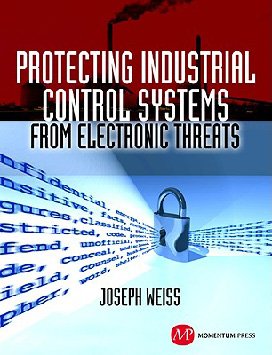
Dirigido tanto a los principiantes, como a los expertos en seguridad informática y sistemas de control industrial (ICS), este libro ayudará a los lectores a comprender mejor la protección de normas de control interno de las amenazas electrónicas. ... Leer más ►
Publicado el 3-Ene-2012 • 20.16hs
Publicado el 25-Set-2009 • 01.26hs
Publicado el 17-Dic-2008 • 08.32hs
Publicado el 11-Oct-2016 • 12.48hs
Publicado el 15-Mar-2016 • 11.59hs
Publicado el 2-Feb-2017 • 11.38hs
Publicado el 20-Jun-2014 • 17.17hs
Publicado el 31-May-2011 • 05.13hs
Publicado el 25-Set-2008 • 17.54hs
Publicado el 1-Set-2016 • 16.11hs
Publicado el 31-Ago-2016 • 18.53hs
Publicado el 19-Ene-2017 • 15.47hs
Publicado el 4-Jul-2016 • 18.51hs
 © 2001-2026 DAA Contenidos Digitales, S.L.
![IBM Security Trusteer: Suite para protección avanzada contra el fraude. Introducción y demo. [Video]](https://www.seguridadmania.com/img/articles/71525/Captura.PNG)
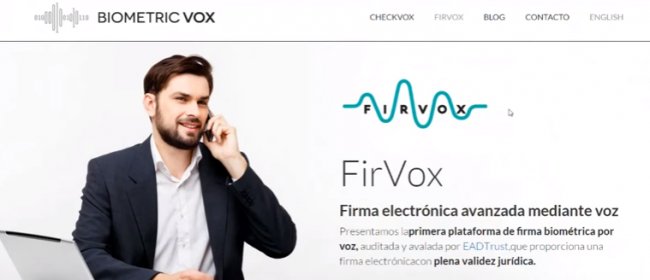

![Ciberseguridad en Comunicaciones y Skype para empresas con Voiping [Video-entrevista de 40 mnts.]](https://www.seguridadmania.com/img/articles/71425/Volping.PNG)
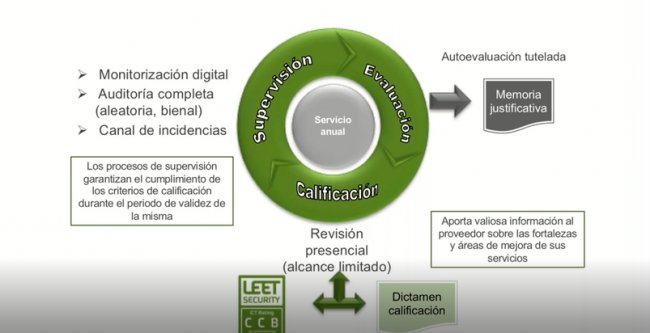
![Ciberseguridad en la gran empresa según el CIO de Vocento [Webinar de 6o min]](https://www.seguridadmania.com/img/articles/71622/vocento.png)