Seguridad Mania.com - España y América Latina
Portal sobre tecnologías para la seguridad física
- Destacamos »
- software Anti Blanqueo

SALT LAKE CITY, UT -- (Marketwire) -- 10/04/12 -- Venafi, the inventor of and market leader in Enterprise Key and Certificate Management (EKCM) solutions, is advising all organizations reliant on Microsoft Windows operating systems to take immediate action to find and replace all digital certificates signed with RSA encryption keys that are less than 1024 bits in length. In the wake of the Flame malware attacks, Microsoft has advised its customers to take this step to harden security against known vulnerabilities and attack vectors in order to prevent business and operational disruptions.
According to Microsoft security advisories and its Security Response Center Blog (http://blogs.technet.com/b/msrc/archive/2012/09/06/september-ans-and-an-important-heads-up-concerning-certificates.aspx), Microsoft has set October 9 as the deadline for replacing all certificates signed with RSA keys less than 1024 bits in length. According to many reports, if not replaced by this deadline, the risk of certificate-based malware attacks will remain high and disruptions to business and computing operations could include everything from Internet Explorer failures to inability to encrypt or digitally sign emails on Outlook 2010 and other legacy systems that rely on the older, weaker encryption keys.
Microsoft is addressing its security problem with software updates and has encouraged administrators to accept and deploy them. However, the company's update does not address weak keys and certificates deployed that are outside of the Microsoft CAPI environment. Enterprises that want to address security risks driven by weak cryptographic keys deployed across their networks will need to utilize technologies outside of Microsoft updates to identify, revoke and replace these keys and certificates. Microsoft's efforts will not simply affect the certificate stores but any application that uses CAPI certificate processing -- no matter where the certificate is.
In January 2011, NIST depreciated keys of 1024 bits or less. Despite this guidance research demonstrates that 56 percent of organizations do not use recommended key lengths as part of their defenses and that 20 percent are not aware of what encryption keys they have in use. To learn more about security risks associated with weak key lengths and how to decrease risk through best practices, download the Venafi 2011 Security Best Practices Assessment: http://www.venafi.com/wp-content/uploads/2011/09/2011_IT_Security_Best_Practices_Assessment_Executive_Overview.pdf
About Venafi
Venafi is the inventor of and market leader in Enterprise Key and Certificate Management (EKCM) solutions. Venafi delivered the first enterprise-class solution to automate the provisioning, discovery, monitoring and management of digital certificates and encryption keys -- from the datacenter to the cloud and beyond -- built specifically for encryption management interoperability across heterogeneous environments. Venafi products reduce the unquantified and unmanaged risks associated with encryption deployments that result in data breaches, security audit failures and unplanned system outages. Venafi also publishes best practices for effective key and certificate management at www.venafi.com/best-practices. Venafi customers include the world's most prestigious Global 2000 organizations in financial services, insurance, high tech, telecommunications, aerospace, healthcare and retail. Venafi is backed by top-tier venture capital funds, including Foundation Capital, Pelion Venture Partners and Origin Partners. For more information, visit www.venafi.com.
![La Ciberseguridad en Robots industriales según Trend Micro [Videos+Informe 48 págs]](https://www.seguridadmania.com/img/articles/71596/dentro.PNG)
Publicamos interesante Informe de más de 48 págs y varios videos demostrativos sobre los posibles ataques a los robots de montaje de las fábricas. ... Leer más ►
Publicado el 22-Jun-2017 • 10.48hs
Publicado el 20-Jun-2017 • 20.22hs

Dirigido tanto a los principiantes, como a los expertos en seguridad informática y sistemas de control industrial (ICS), este libro ayudará a los lectores a comprender mejor la protección de normas de control interno de las amenazas electrónicas. ... Leer más ►
Publicado el 3-Ene-2012 • 20.16hs
Publicado el 25-Set-2009 • 01.26hs
Publicado el 17-Dic-2008 • 08.32hs
Publicado el 11-Oct-2016 • 12.48hs
Publicado el 15-Mar-2016 • 11.59hs
Publicado el 2-Feb-2017 • 11.38hs
Publicado el 20-Jun-2014 • 17.17hs
Publicado el 31-May-2011 • 05.13hs
Publicado el 25-Set-2008 • 17.54hs
Publicado el 1-Set-2016 • 16.11hs
Publicado el 31-Ago-2016 • 18.53hs
Publicado el 19-Ene-2017 • 15.47hs
Publicado el 4-Jul-2016 • 18.51hs
 © 2001-2026 DAA Contenidos Digitales, S.L.
![IBM Security Trusteer: Suite para protección avanzada contra el fraude. Introducción y demo. [Video]](https://www.seguridadmania.com/img/articles/71525/Captura.PNG)


![Ciberseguridad en Comunicaciones y Skype para empresas con Voiping [Video-entrevista de 40 mnts.]](https://www.seguridadmania.com/img/articles/71425/Volping.PNG)
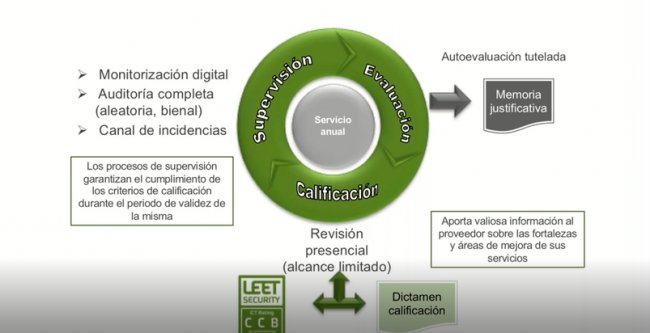
![Ciberseguridad en la gran empresa según el CIO de Vocento [Webinar de 6o min]](https://www.seguridadmania.com/img/articles/71622/vocento.png)