Seguridad Mania.com - España y América Latina
Portal sobre tecnologías para la seguridad física
- Destacamos »
- software Anti Blanqueo

BURLINGTON, MA -- (Marketwire) -- 01/29/13 -- Arbor Networks Inc.
Arbor Networks Inc., a leading provider of network security and management solutions for enterprise and service provider networks, today released its 8th Annual Worldwide Infrastructure Security Report (WISR) offering a rare view into the most critical security challenges facing today's network operators. Among the key findings this year, advanced persistent threats (APTs) are top of mind for both service providers and enterprises; distributed denial of service (DDoS) attacks have plateaued in size but become more complex; data center and cloud services are especially attractive targets; and mobile operators continue to be reactive in terms of network visibility. The report also covers the impact of BYOD as well as infrastructure issues such as VoIP and IPv6.
Based on survey data provided by network operators from around the world, this annual report is designed to help network operators make more informed decisions about their security strategies as they relate to the integrity of mission-critical Internet and other IP-based infrastructure. Arbor's long-standing customer relationships and reputation as a trusted advisor and solution provider make this report possible each year. Click here to access the Arbor Networks 8th Annual Worldwide Infrastructure Security Report.
"Since our founding, Arbor has worked with the world's most demanding network operators. This annual report has been a true partnership with our customers and the broader information security community," said Arbor Networks President Colin Doherty. "Again this year, the report delivers valuable insight for service and cloud providers and mobile and enterprise network operators."
Key Findings:
Advanced Persistent Threats (APTs) a Top Concern for Service Providers and Enterprises
Advanced threats are a well-established problem for enterprise network operators. This year's survey found an increased level of concern over 'botted' or compromised machines on provider networks. The increase in botted hosts is not surprising given the number and complexity of malware variants that exist, their rate of evolution and the consequent inability of Intrusion Detection Systems (IDS) and Anti-Virus (AV) systems to fully protect them. Looking ahead, there is even more concern about APT, industrial espionage, data exfiltration and malicious insiders.
DDoS: Attack Sizes Plateau; Complex Multi-Vector Attacks on the Rise
This year's results confirm that application-layer and multi-vector attacks are continuing to evolve while volumetric attacks are starting to plateau in terms of size. While 86 percent reported application-layer attacks targeting Web services, most concerning is that multi-vector attacks are up markedly. Attackers have now turned to sophisticated, long-lived, multi-vector attacks -- combinations of attack vectors designed to cut through the defenses an organization has in place -- to achieve their goals. Multi-vector attacks are the most difficult to defend against and require layered defenses for successful mitigation. This year's report includes a case study on the ongoing attacks against U.S. financial services organizations, a great example of a multi-vector attack.
Data Centers and Cloud Services are Increasingly Victimized
As more companies move their services to the cloud, they now have to be wary of the shared risks and the potential for collateral damage. This correlates directly to the types of companies being targeted by attackers, with e-commerce and online gaming sites increasingly targeted, according to survey results this year.
Mobile Providers Continue to be Reactive
There has been limited improvement in visibility or investment in detection and mitigation solutions specific to the mobile network since the last survey. The economics of consumer subscriber networks do not incent providers to implement security until a problem occurs.
The number of mobile devices, along with the sophistication and power of these devices, continues to increase year over year. We believe it is only a matter of time before botnets and DDoS become more prevalent within mobile infrastructure.
Bring Your Own Device (BYOD) Trend Creates New Challenges
In the growing trend commonly referred to as BYOD, half of respondents now allow personal devices on their networks. However, only 40 percent have a means to monitor usage of these devices. Additionally, only 13 percent actively block access to social media applications and sites. Clearly, BYOD is creating more entry points for hackers to enter the network.
DNS Infrastructure Remains Vulnerable
71 percent of respondents reported good visibility at Layers 3 and 4 but only 27 percent reported Layer 7 visibility. This lack of visibility coupled with a lack of dedicated security personnel create an ideal environment for attackers to exploit. Attackers now have many targets from which to create reflection attacks.
IPv6 Deployments Becoming Pervasive
In last year's WISR, survey respondents acknowledged the first reports of IPv6 DDoS attacks on production networks. Even though IPv6 DDoS attacks were being reported, IPv6 security incidents were still relatively rare at that time. Considering that 75 percent of survey respondents are Service Providers, it's no great surprise that IPv6 deployments are accelerating today. This opens new opportunities for attackers to bypass network controls by switching between IPv4 and IPv6 networks.
Additional Resources:
Survey Scope and Demographics
About Arbor Networks
Arbor Networks, Inc. is a leading provider of network security and management solutions for enterprise and service provider networks, including the vast majority of the world's Internet service providers and many of the largest enterprise networks in use today. Arbor's proven network security and management solutions help grow and protect customer networks, businesses and brands. Through its unparalleled, privileged relationships with worldwide service providers and global network operators, Arbor provides unequalled insight into and perspective on Internet security and traffic trends via the ATLAS® Active Threat Level Analysis System. Representing a unique collaborative effort with 250+ network operators across the globe, ATLAS enables the sharing of real-time security, traffic and routing information that informs numerous business decisions.
For technical insight into the latest security threats and Internet traffic trends, please visit our website at arbornetworks.com and our blog at http://ddos.arbornetworks.com.
Trademark Notice: Arbor Networks, Peakflow, ArbOS, How Networks Grow, ATLAS, Pravail, Arbor Optima, Cloud Signaling, the Arbor Networks logo and Arbor Networks: Smart. Available. Secure. are all trademarks of Arbor Networks, Inc. All other brand names may be trademarks of their respective owners.
Contact:
Arbor Networks
Kevin Whalen
Director, Corporate Communications
Direct: +1 978 703 6663
E: kwhalen@arbor.net
![La Ciberseguridad en Robots industriales según Trend Micro [Videos+Informe 48 págs]](https://www.seguridadmania.com/img/articles/71596/dentro.PNG)
Publicamos interesante Informe de más de 48 págs y varios videos demostrativos sobre los posibles ataques a los robots de montaje de las fábricas. ... Leer más ►
Publicado el 22-Jun-2017 • 10.48hs
Publicado el 20-Jun-2017 • 20.22hs

Dirigido tanto a los principiantes, como a los expertos en seguridad informática y sistemas de control industrial (ICS), este libro ayudará a los lectores a comprender mejor la protección de normas de control interno de las amenazas electrónicas. ... Leer más ►
Publicado el 3-Ene-2012 • 20.16hs
Publicado el 25-Set-2009 • 01.26hs
Publicado el 17-Dic-2008 • 08.32hs
Publicado el 11-Oct-2016 • 12.48hs
Publicado el 15-Mar-2016 • 11.59hs
Publicado el 2-Feb-2017 • 11.38hs
Publicado el 20-Jun-2014 • 17.17hs
Publicado el 31-May-2011 • 05.13hs
Publicado el 25-Set-2008 • 17.54hs
Publicado el 1-Set-2016 • 16.11hs
Publicado el 31-Ago-2016 • 18.53hs
Publicado el 19-Ene-2017 • 15.47hs
Publicado el 4-Jul-2016 • 18.51hs
 © 2001-2026 DAA Contenidos Digitales, S.L.
![IBM Security Trusteer: Suite para protección avanzada contra el fraude. Introducción y demo. [Video]](https://www.seguridadmania.com/img/articles/71525/Captura.PNG)


![Ciberseguridad en Comunicaciones y Skype para empresas con Voiping [Video-entrevista de 40 mnts.]](https://www.seguridadmania.com/img/articles/71425/Volping.PNG)
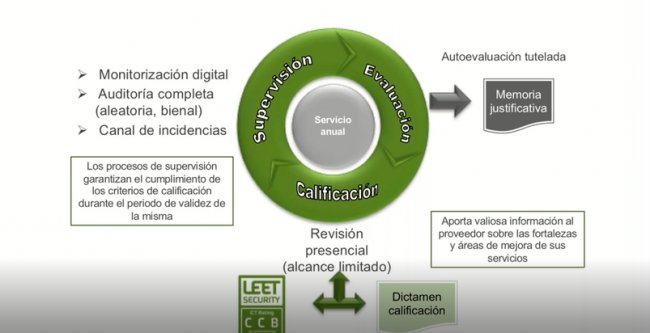
![Ciberseguridad en la gran empresa según el CIO de Vocento [Webinar de 6o min]](https://www.seguridadmania.com/img/articles/71622/vocento.png)