Get More Business Value from a Data Lake via Data-as-a-Service (DaaS) - Seguridad Mania.com - España y América Latina
Portal sobre tecnologías para la seguridad física
Estás en »Webinars
Estás en »Webinars
Miércoles 16 de Ago, 2017
Data lakes are coming on strong as a modern and practical way of managing the large volumes and broad range of data types and sources that enterprises are facing today. TDWI sees data lakes managing diverse data successfully for business-driven use cases, such as omnichannel marketing, multimodule ERP, the digital supply chain, and data warehouses extended for business analytics. Yet, even in business-driven examples like these, user organizations still haven’t achieved full business value and return on investment from their data lakes.
What’s inhibiting the business value of data lakes? The problem is not the data lake itself; a data lake is a very simple design pattern that is surprisingly easy to deploy and populate. The problem is that some users fail to give the lake and its users proper tooling in the middle layer of the architecture, which Data-as-a-Service (DaaS) can ably address. DaaS is a critical success factor because it can cope with some of the lake’s biggest challenges. First, the data of a lake is mostly raw source data that business end users have trouble understanding. Second, most lakes are deployed atop Hadoop, which is notoriously poor with business-friendly metadata and data cataloging. Third, most lakes involve environments of multiple data platforms, which make it difficult to get a unified view of available data. Finally, a data lake is a compliance infraction just waiting to happen without best practices and tool automation for data governance.
This webinar will drill into how DaaS can complete data lake architectures and contribute to the business value and ROI for a data lake:
-Most business users expect self-service access to a lake’s data, and that won’t succeed without a business-friendly data catalog and related functions. The catalog also enables governance and security features.
-Cross-platform views, processing, and data flows are required for the broad analyses, reports, and data synchronization expected by business users.
-Marketers are using DaaS with data lakes to consolidate channel, lead, and customer behavior data so advanced analytics can algorithmically join diverse data for a richer activity history, which in turn helps to identify the best prospects.
-The size and complexity of lake data is daunting to all user types; they need tool automation enabled by machine learning and artificial intelligence that can recommend datasets and processing.
-Likewise, automation for run-time data governance and security reduces the probability of noncompliance data access and use.
06:00 - 07:00 hs GMT+1
11:00 - 12:00 hs GMT+1
04:00 - 05:00 hs GMT+1
05:00 - 06:00 hs GMT+1
06:00 - 07:00 hs GMT+1
09:00 - 10:00 hs GMT+1
16:00 - 17:00 hs GMT+1
00:00 - 01:00 hs GMT+1
04:30 - 05:00 hs GMT+1
01:00 - 02:00 hs GMT+1
02:00 - 03:00 hs GMT+1
03:00 - 04:00 hs GMT+1
05:00 - 06:00 hs GMT+1
11:30 - 12:00 hs GMT+1
13:00 - 14:00 hs GMT+1
00:00 - 01:00 hs GMT+1
03:00 - 04:00 hs GMT+1
03:00 - 04:00 hs GMT+1
04:30 - 05:00 hs GMT+1
03:00 - 04:00 hs GMT+1
06:00 - 07:00 hs GMT+1
13:00 - 14:00 hs GMT+1
03:00 - 04:00 hs GMT+1
03:30 - 04:00 hs GMT+1
01:00 - 02:00 hs GMT+1
05:00 - 06:00 hs GMT+1
02:00 - 03:00 hs GMT+1
03:00 - 04:00 hs GMT+1
13:00 - 14:00 hs GMT+1
06:00 - 07:00 hs GMT+1
09:00 - 10:00 hs GMT+1
05:00 - 06:00 hs GMT+1
09:00 - 10:00 hs GMT+1
06:00 - 07:00 hs GMT+1
11:00 - 12:00 hs GMT+1
04:00 - 05:00 hs GMT+1
05:00 - 06:00 hs GMT+1
06:00 - 07:00 hs GMT+1
09:00 - 10:00 hs GMT+1
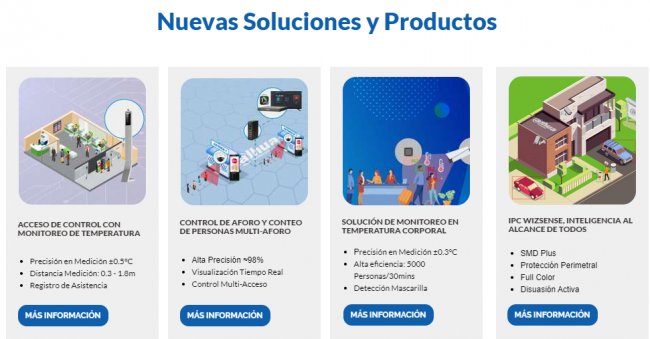
La Autoridad Portuaria de la Bahía de Algeciras (APBA) ha instalado cámaras térmicas en las zonas de mayor tránsito de pasajeros del puerto para controlar la temperatura corporal de los pasajeros sin necesidad de pararles. ... Leer más ►
Publicado el 2-Jul-2020 • 14.23hs
Publicado el 25-Ene-2017 • 19.27hs
Publicado el 20-Ene-2017 • 13.11hs
![Ciberseguridad en la gran empresa según el CIO de Vocento [Webinar de 6o min]](https://www.seguridadmania.com/img/articles/71622/vocento.png)
Publicamos grabación de webinar que tuvo lugar el pasado 28/03/2019 por el CIO del Grupo de Medios de Comunicación español Vocento Jorge Oteo en el que explica su visión de la Ciberseguridad hoy. ... Leer más ►
Publicado el 29-Mar-2019 • 10.12hs
Publicado el 20-Jun-2018 • 11.21hs
Publicado el 31-May-2018 • 10.21hs
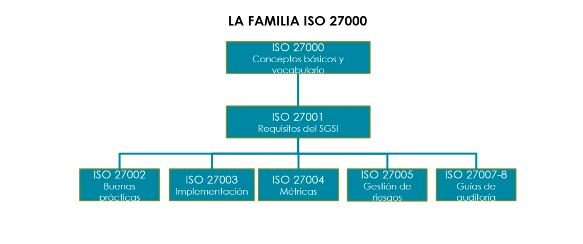
... Leer más ►
Publicado el 23-Jun-2020 • 16.05hs
Publicado el 26-Set-2019 • 10.36hs
Publicado el 26-Mar-2019 • 12.09hs
Publicado el 11-Oct-2016 • 12.48hs
Publicado el 15-Mar-2016 • 11.59hs
Publicado el 2-Feb-2017 • 11.38hs
Publicado el 20-Jun-2014 • 17.17hs
Publicado el 31-May-2011 • 05.13hs
Publicado el 25-Set-2008 • 17.54hs
Publicado el 1-Set-2016 • 16.11hs
Publicado el 31-Ago-2016 • 18.53hs
Publicado el 19-Ene-2017 • 15.47hs
Publicado el 4-Jul-2016 • 18.51hs
 © 2001-2026 DAA Contenidos Digitales, S.L.


