Consideration how to use Retention Index information to support Mass Spectral Matching based identifications in GC/MS - Seguridad Mania.com - España y América Latina
Portal sobre tecnologías para la seguridad física
Estás en »Webinars
Estás en »Webinars
Martes 30 de Set, 2025
Organic extractables & leachables surfaced by GC/MS are often identified by mass spectral matching (MSM) in which the experimental mass spectrum is matched to reference spectra contained in a spectral library. The compound is “identified” as being the compound whose reference mass spectrum best matches the experimental spectrum, which often leads to flawed identifications. A compound’s Retention Index (RI) is an independent means of corroborating the proposed MSM identities. A compounds’ analytical RI can be matched to reference RIs contained in a RI database (e.g., NIST23). The identity secured by MSM is corroborated when the experimental RI acceptably matches the reference RI of the compound proposed by MSM. Practical use of RI matching requires that acceptance criteria be established to define when an acceptable RI match has been achieved. Acceptance criteria for RI for supporting, rejecting, or accepting proposed identities were established (based on a confusion matrix) using experimental values for RI for 3140 compounds, secured by Nelson Labs and reference RI values found in the commercially available NIST23 library. For 71% of the 3140 compounds, the difference in Retention Index (between the NIST reference RI-value and the experimental RI-value) was less than ΔRI≤20. 96% of the candidate structures, obtained via mass spectral matching, were rejected correctly when applying a rejection criterion for the difference in Retention Index (between the NIST reference RI-value and the experimental RI-value) of ΔRI>50. In addition, some other very interesting conclusions could be drawn from this large data set which will be an eye opener to many GC/MS-practitioners. The above conclusions will be applied to 10 case studies showing how these “general rules” can be put in practice and how they can help securing the right identity of a compound using Mass Spectral Matching.
18:00 - 19:00 hs GMT+1
23:00 - 00:00 hs GMT+1
03:00 - 04:00 hs GMT+1
05:00 - 06:00 hs GMT+1
01:00 - 02:00 hs GMT+1
05:30 - 06:00 hs GMT+1
03:00 - 04:00 hs GMT+1
05:00 - 06:00 hs GMT+1
10:00 - 11:00 hs GMT+1
13:00 - 14:00 hs GMT+1
23:00 - 00:00 hs GMT+1
03:00 - 04:00 hs GMT+1
08:00 - 09:00 hs GMT+1
02:00 - 03:00 hs GMT+1
05:00 - 06:00 hs GMT+1
10:00 - 11:00 hs GMT+1
10:00 - 11:00 hs GMT+1
11:00 - 12:00 hs GMT+1
18:00 - 19:00 hs GMT+1
02:00 - 03:00 hs GMT+1
03:00 - 04:00 hs GMT+1
01:00 - 02:00 hs GMT+1
05:00 - 06:00 hs GMT+1
03:00 - 04:00 hs GMT+1
06:00 - 07:00 hs GMT+1
13:00 - 14:00 hs GMT+1
18:00 - 19:00 hs GMT+1
14:00 - 15:00 hs GMT+1
18:00 - 19:00 hs GMT+1
03:00 - 04:00 hs GMT+1
05:00 - 06:00 hs GMT+1
05:30 - 06:00 hs GMT+1
09:00 - 10:00 hs GMT+1
05:00 - 06:00 hs GMT+1
05:00 - 06:00 hs GMT+1
13:00 - 14:00 hs GMT+1
14:00 - 15:00 hs GMT+1
18:00 - 19:00 hs GMT+1
23:00 - 00:00 hs GMT+1
03:00 - 04:00 hs GMT+1
05:00 - 06:00 hs GMT+1
01:00 - 02:00 hs GMT+1
05:30 - 06:00 hs GMT+1
03:00 - 04:00 hs GMT+1
05:00 - 06:00 hs GMT+1
10:00 - 11:00 hs GMT+1
13:00 - 14:00 hs GMT+1
02:00 - 03:00 hs GMT+1
06:00 - 07:00 hs GMT+1
02:00 - 03:00 hs GMT+1
03:00 - 04:00 hs GMT+1
23:00 - 00:00 hs GMT+1
03:00 - 04:00 hs GMT+1
08:00 - 09:00 hs GMT+1
02:00 - 03:00 hs GMT+1
05:00 - 06:00 hs GMT+1
10:00 - 11:00 hs GMT+1
10:00 - 11:00 hs GMT+1

La Autoridad Portuaria de la Bahía de Algeciras (APBA) ha instalado cámaras térmicas en las zonas de mayor tránsito de pasajeros del puerto para controlar la temperatura corporal de los pasajeros sin necesidad de pararles. ... Leer más ►
Publicado el 2-Jul-2020 • 14.23hs
Publicado el 25-Ene-2017 • 19.27hs
Publicado el 20-Ene-2017 • 13.11hs
![Ciberseguridad en la gran empresa según el CIO de Vocento [Webinar de 6o min]](https://www.seguridadmania.com/img/articles/71622/vocento.png)
Publicamos grabación de webinar que tuvo lugar el pasado 28/03/2019 por el CIO del Grupo de Medios de Comunicación español Vocento Jorge Oteo en el que explica su visión de la Ciberseguridad hoy. ... Leer más ►
Publicado el 29-Mar-2019 • 10.12hs
Publicado el 20-Jun-2018 • 11.21hs
Publicado el 31-May-2018 • 10.21hs
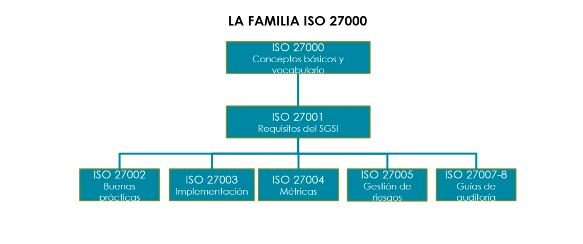
... Leer más ►
Publicado el 23-Jun-2020 • 16.05hs
Publicado el 26-Set-2019 • 10.36hs
Publicado el 26-Mar-2019 • 12.09hs
Publicado el 11-Oct-2016 • 12.48hs
Publicado el 15-Mar-2016 • 11.59hs
Publicado el 2-Feb-2017 • 11.38hs
Publicado el 20-Jun-2014 • 17.17hs
Publicado el 31-May-2011 • 05.13hs
Publicado el 25-Set-2008 • 17.54hs
Publicado el 1-Set-2016 • 16.11hs
Publicado el 31-Ago-2016 • 18.53hs
Publicado el 19-Ene-2017 • 15.47hs
Publicado el 4-Jul-2016 • 18.51hs
 © 2001-2026 DAA Contenidos Digitales, S.L.


