Everything You Wanted to Know...But Were Too Proud to Ask - The Memory Pod - Seguridad Mania.com - España y América Latina
Portal sobre tecnologías para la seguridad física
Estás en »Webinars
Estás en »Webinars
Miércoles 1 de May, 2019
Traditionally, much of the IT infrastructure that we’ve built over the years can be divided fairly simply into storage (the place we save our persistent data), network (how we get access to the storage and get at our data) and compute (memory and CPU that crunches on the data). In fact, so successful has this model been that a trip to any cloud services provider allows you to order (and be billed for) exactly these three components. We build effective systems in a cost-optimal way by using appropriate quantities of expensive and fast memory (DRAM for instance) to cache our cheaper and slower storage. But currently fast memory has no persistence at all; it’s only storage that provides the application the guarantee that storing, modifying or deleting data does exactly that. Memory and storage differ in other ways. For example, we load from memory to registers on the CPU, perform operations there, and then store the results back to memory by using byte addresses. This load/store technology is different from storage, where we tend to move data back and fore between memory and storage in large blocks, by using an API (application programming interface). New memory technologies are challenging these assumptions. They look like storage in that they’re persistent, if a lot faster than traditional disks or even Flash based SSDs, but we address them in bytes, as we do memory like DRAM, if more slowly. These PMs (persistent memories) lie between storage and memory in latency, bandwidth and cost, while providing memory semantics and storage persistence. In this webcast, SNIA experts will discuss: •Traditional uses of storage and memory as a cache •How can we build and use systems based on PM? •What would a system with storage, persistent memory and DRAM look like? •Do we need a new programming model to take advantage of PM? •Interesting use cases for systems equipped with PM •How we might take better advantage of this new technology
18:00 - 19:00 hs GMT+1
23:00 - 00:00 hs GMT+1
03:00 - 04:00 hs GMT+1
05:00 - 06:00 hs GMT+1
01:00 - 02:00 hs GMT+1
05:30 - 06:00 hs GMT+1
03:00 - 04:00 hs GMT+1
05:00 - 06:00 hs GMT+1
10:00 - 11:00 hs GMT+1
13:00 - 14:00 hs GMT+1
23:00 - 00:00 hs GMT+1
03:00 - 04:00 hs GMT+1
08:00 - 09:00 hs GMT+1
02:00 - 03:00 hs GMT+1
05:00 - 06:00 hs GMT+1
10:00 - 11:00 hs GMT+1
10:00 - 11:00 hs GMT+1
11:00 - 12:00 hs GMT+1
18:00 - 19:00 hs GMT+1
02:00 - 03:00 hs GMT+1
03:00 - 04:00 hs GMT+1
01:00 - 02:00 hs GMT+1
05:00 - 06:00 hs GMT+1
03:00 - 04:00 hs GMT+1
06:00 - 07:00 hs GMT+1
13:00 - 14:00 hs GMT+1
18:00 - 19:00 hs GMT+1
14:00 - 15:00 hs GMT+1
18:00 - 19:00 hs GMT+1
03:00 - 04:00 hs GMT+1
05:00 - 06:00 hs GMT+1
05:30 - 06:00 hs GMT+1
09:00 - 10:00 hs GMT+1
05:00 - 06:00 hs GMT+1
05:00 - 06:00 hs GMT+1
13:00 - 14:00 hs GMT+1
14:00 - 15:00 hs GMT+1
18:00 - 19:00 hs GMT+1
23:00 - 00:00 hs GMT+1
03:00 - 04:00 hs GMT+1
05:00 - 06:00 hs GMT+1
01:00 - 02:00 hs GMT+1
05:30 - 06:00 hs GMT+1
03:00 - 04:00 hs GMT+1
05:00 - 06:00 hs GMT+1
10:00 - 11:00 hs GMT+1
13:00 - 14:00 hs GMT+1
18:00 - 19:00 hs GMT+1
02:00 - 03:00 hs GMT+1
03:00 - 04:00 hs GMT+1
23:00 - 00:00 hs GMT+1
03:00 - 04:00 hs GMT+1
08:00 - 09:00 hs GMT+1
02:00 - 03:00 hs GMT+1
05:00 - 06:00 hs GMT+1
10:00 - 11:00 hs GMT+1
10:00 - 11:00 hs GMT+1
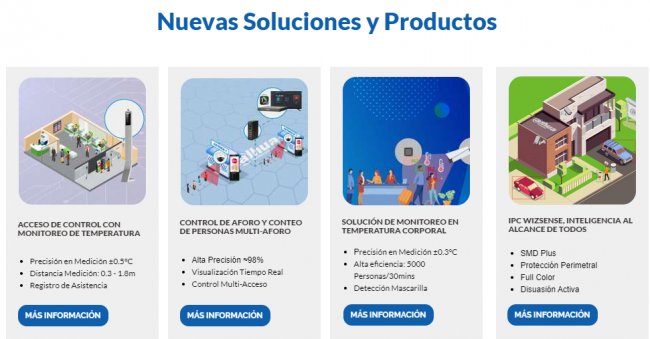
La Autoridad Portuaria de la Bahía de Algeciras (APBA) ha instalado cámaras térmicas en las zonas de mayor tránsito de pasajeros del puerto para controlar la temperatura corporal de los pasajeros sin necesidad de pararles. ... Leer más ►
Publicado el 2-Jul-2020 • 14.23hs
Publicado el 25-Ene-2017 • 19.27hs
Publicado el 20-Ene-2017 • 13.11hs
![Ciberseguridad en la gran empresa según el CIO de Vocento [Webinar de 6o min]](https://www.seguridadmania.com/img/articles/71622/vocento.png)
Publicamos grabación de webinar que tuvo lugar el pasado 28/03/2019 por el CIO del Grupo de Medios de Comunicación español Vocento Jorge Oteo en el que explica su visión de la Ciberseguridad hoy. ... Leer más ►
Publicado el 29-Mar-2019 • 10.12hs
Publicado el 20-Jun-2018 • 11.21hs
Publicado el 31-May-2018 • 10.21hs
... Leer más ►
Publicado el 23-Jun-2020 • 16.05hs
Publicado el 26-Set-2019 • 10.36hs
Publicado el 26-Mar-2019 • 12.09hs
Publicado el 11-Oct-2016 • 12.48hs
Publicado el 15-Mar-2016 • 11.59hs
Publicado el 2-Feb-2017 • 11.38hs
Publicado el 20-Jun-2014 • 17.17hs
Publicado el 31-May-2011 • 05.13hs
Publicado el 25-Set-2008 • 17.54hs
Publicado el 1-Set-2016 • 16.11hs
Publicado el 31-Ago-2016 • 18.53hs
Publicado el 19-Ene-2017 • 15.47hs
Publicado el 4-Jul-2016 • 18.51hs
 © 2001-2026 DAA Contenidos Digitales, S.L.


